
What Is a Bistro? How Bistro Dining Differs From Traditional Pub Dining
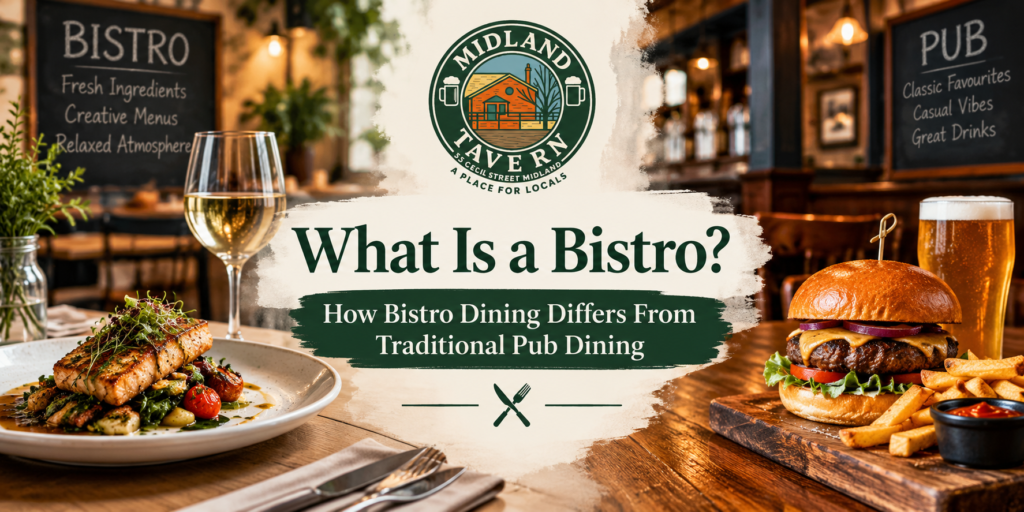
Table of Contents
The word bistro appears on restaurant signs, pub menus and dining room doors, but its meaning is not always as simple as it first seems. The term has French roots and was originally connected with small, informal places serving food and drinks. Over time, however, bistro dining has developed in different countries and now covers a much wider range of casual dining experiences.
A bistro is generally a relaxed place where people can enjoy a proper meal without the formality associated with fine dining. The menu can vary from French-inspired dishes to modern local food, while the setting is usually comfortable and welcoming. In Australia, the word is also commonly used for dining areas within pubs, clubs and hotels, which is why bistro dining and pub dining can sometimes look very similar.
What Is a Bistro?
A bistro is a casual dining establishment where food is an important part of the experience. Traditional French bistros were associated with simple meals, drinks and modest surroundings, giving local people a comfortable place to eat without the formal style found in more expensive restaurants.
The modern meaning is much broader. A bistro does not have to serve French food, follow a particular interior design or use one specific type of service. What matters more is the overall character of the experience, which tends to be relaxed, approachable and centred around enjoying a meal.
A bistro may have a focused menu, although this is not a strict requirement. The food is often designed to be familiar and enjoyable rather than overly complicated, while the atmosphere gives diners plenty of room to sit, talk and enjoy their time together.
This makes the bistro a comfortable middle ground between everyday casual eating and more formal restaurant dining.
What Does “Bistro” Mean?
The word bistro, also written as bistrot, comes from French. The French Academy’s dictionary describes a bistrot as a drinks establishment, café or small popular restaurant.
The exact history of the word is less certain. A popular story connects it with the Russian word bystro, meaning “quickly”, supposedly used by Russian soldiers in Paris when asking for faster service. Although the story is often repeated, it has not been established as the proven source of the word.
What is clearer is the way the word became associated with small, informal places where people could enjoy food and drinks in a simple social setting. That basic idea has remained important even as bistros have changed and spread beyond France.
What Is Bistro Dining Like?
Understanding bistro dining is easier when you think about the experience rather than a strict set of rules.
A typical bistro aims to make a meal feel relaxed and enjoyable. You might visit for lunch with a friend, have dinner with family or meet someone for an easy evening meal without feeling that the occasion needs to be formal.
The menu may include familiar dishes, seasonal food, local ingredients or modern versions of traditional meals. Some bistros have full table service, while others use counter ordering or a mixture of service styles. The exact approach depends on the venue.
This flexibility is particularly noticeable in Australia, where the term bistro is often used for a dining area within a larger hospitality venue. It can be a separate part of a pub or hotel, giving customers a space that is more focused on meals while still being connected to the wider venue.
The result is a dining experience that feels comfortable rather than rigid. You can enjoy a proper meal while still having the easy-going atmosphere associated with casual dining.
Bistro Dining vs Traditional Pub Dining
Bistro dining and traditional pub dining have plenty in common, especially in Australia, but they usually place emphasis on different parts of the visit.
A traditional pub has historically been a place for people to meet, have drinks, watch sport, enjoy entertainment and eat together. Food is an important part of many modern pubs, but the pub experience can extend well beyond the dining table.
Bistro dining generally puts greater attention on the meal. The dining space, menu and service are more closely connected to the food experience, even though drinks and socialising can still be an important part of the visit.
Bistro Dining | Traditional Pub Dining |
Food is central to the experience | Food is part of a wider social experience |
Usually has a dining-focused setting | May include bars, sports and entertainment areas |
Menus may focus on main meals | Often includes familiar pub favourites |
Common for lunch and dinner | Can suit meals, drinks and social occasions |
Relaxed and informal | Casual and social |
These differences are not hard rules. A pub can have a bistro, while a bistro can have a lively bar and serve a wide range of drinks. Modern hospitality has made the two formats overlap more than they did in the past.
For example, a venue may have a dedicated dining area for people who want a full meal, alongside a bar where others are watching sport or meeting friends. Both experiences can exist under the same roof.
This is also why Australian diners may use the words “bistro” and “pub dining” almost interchangeably in some situations. The name can give you an idea of the setting, but the actual venue tells you much more about what to expect.
What Does Bistro Dining Mean in Australia?
In Australia, the meaning of bistro dining has become broader than its traditional French roots.
A bistro can operate as a standalone restaurant, but it can also be found inside a pub, club or hotel. In these settings, the bistro often refers to the food-focused side of the venue rather than a completely separate business.
The menu does not need to be French either. Australian bistros may serve steaks, seafood, schnitzels, pasta, salads, burgers and other familiar meals that suit local tastes.
This reflects the way Australians often approach casual dining. People want food they can recognise and enjoy, but they also want somewhere comfortable where they can spend time with family, friends or colleagues.
That is one reason the bistro format works so naturally within Australian pubs. It gives the dining experience its own focus while keeping the relaxed character of the wider venue.
For a real example of how this broader pub-and-dining model works, Midland Tavern’s heritage venue and history provide useful context about the way a modern Australian tavern combines its heritage setting with dining and social spaces.
What Is Bistro Food?
Traditional bistro food was generally simple, hearty and suitable for everyday dining. French bistro cooking included dishes such as stews, roasted meats, sausages and other filling meals that suited a neighbourhood setting.
Modern bistro food is much wider.
A contemporary bistro may still take inspiration from French cooking, but it can also focus on local ingredients, regional dishes or modern versions of familiar comfort food. There is no fixed list of dishes that every bistro must serve.
The food usually needs to suit the relaxed nature of the venue. Steak, seafood, pasta, salads, chicken dishes and other substantial meals can all fit naturally into a modern bistro menu.
You can see this broader approach in Midland Tavern’s specialties and chef favourites, which include dishes such as steak, steak sanga, lamb shank, seafood linguini, chicken parmi, fish and chips and lemon pepper calamari.
This is why it is better to think of bistro food as a style of casual dining rather than a particular cuisine.
Is a Bistro the Same as a Restaurant?
A bistro can be a type of restaurant, but the two words do not mean exactly the same thing.
Restaurant is the broader term. It can describe everything from a quick casual venue to an expensive fine-dining establishment. Bistro usually gives you a stronger idea of the atmosphere and style, suggesting a more relaxed and informal meal.
The word also does not tell you exactly what will be on the menu. One bistro may focus on French cooking, another may serve modern Australian food, and another may operate inside a pub with a menu based around familiar local favourites.
The best way to understand the term is to see “restaurant” as the wider category and “bistro” as a description of a particular style of dining within that category.
How Has Bistro Dining Changed?
Bistro dining has changed as eating habits have changed. The original French model was closely connected to neighbourhood life, simple food and drinks, while the modern version has travelled far beyond France.
Today, bistros can reflect the food and culture of the communities around them. In Australia, this has helped create a close relationship between bistro dining and pubs, where customers can enjoy a proper meal without giving up the relaxed atmosphere that makes a pub appealing.
The modern bistro therefore does not need to copy a traditional Parisian restaurant. It can take the basic idea of relaxed, approachable dining and adapt it to local tastes.
This flexibility is one of the reasons the word remains useful. It tells diners that they can expect a food-focused experience, while leaving room for each venue to develop its own menu, atmosphere and style.
Looking for a Relaxed Meal? Visit Midland Tavern
For people exploring casual dining in Midland, Midland Tavern offers a menu built around familiar pub favourites and a range of substantial meals. The venue describes itself as a sports bar and grill with food, drinks and a relaxed setting for locals and visitors.
If you would like to see how the venue’s food fits into the wider idea of casual Australian dining, you can explore the current Midland Tavern menu and daily specials.
When you are ready to visit, book a table at Midland Tavern online, or contact the venue on 08 9250 2995. Midland Tavern is located at 23 Cale Street, Midland WA 6056.
Frequently Asked Questions
Is a bistro always a small restaurant?
Traditional bistros were generally small establishments, but modern use of the word is much broader. In Australia, a bistro can also describe a dedicated dining area within a larger pub, club or hotel.
Do bistros serve alcohol?
Alcohol can be part of the bistro experience because food and drinks have traditionally been served together in this type of venue. The range of beverages depends on the individual establishment.
Can a bistro serve Australian food?
Yes. Modern bistro dining is not limited to French cuisine. Australian venues can use the bistro format for local favourites, contemporary dishes and food influenced by many different cooking traditions.
Is bistro dining suitable for families?
Many Australian bistros and pub dining areas provide a relaxed setting for families and groups, although individual venues have their own policies and conditions.